A lens for life
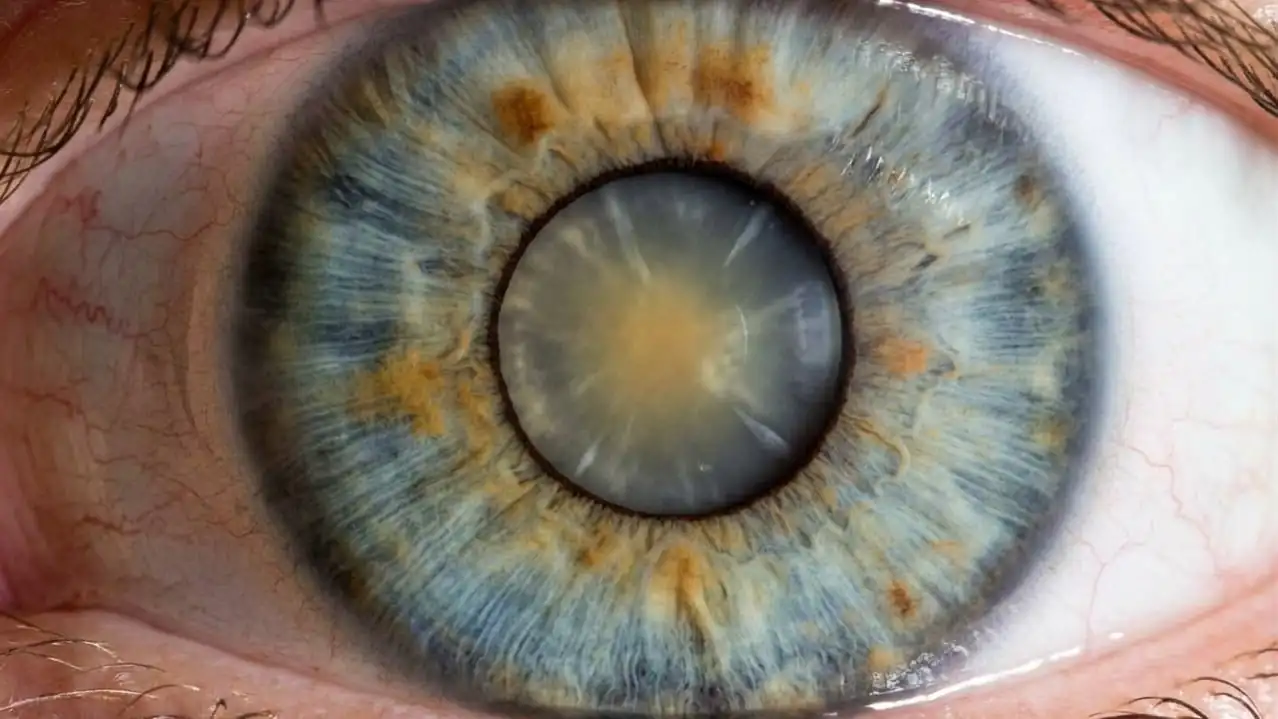
In cataract surgery we replace the cloudy natural lens with a clear intraocular lens that stays inside the eye for good. The choice of that lens decides how you will see after the operation, so it deserves an unhurried conversation.
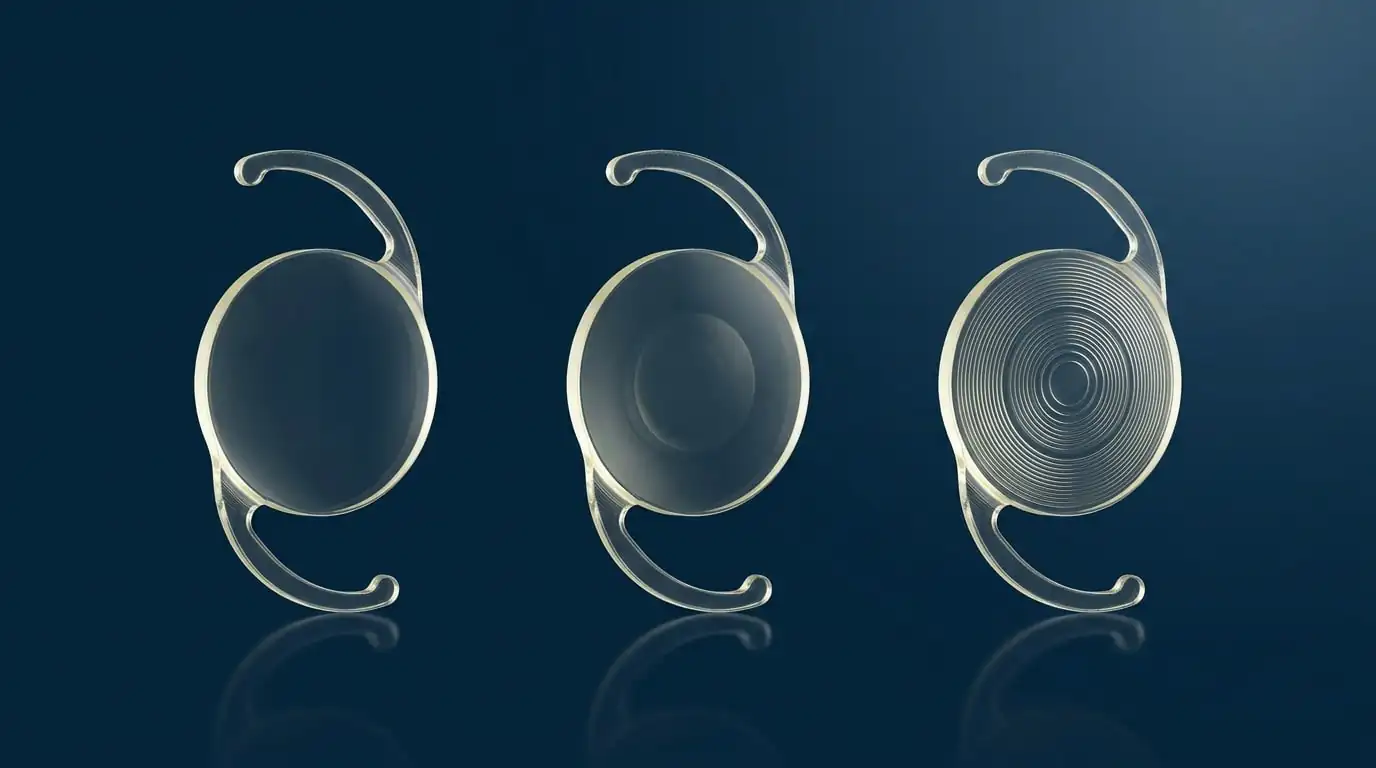
The standard monofocal lens focuses well at a single distance, usually far away. It gives very high quality vision, but nearly all patients need glasses to read and, if they have astigmatism, often for distance too.
So-called “premium” lenses aim to reduce that dependence on glasses. There are three main families, which can be combined:
- Toric: they correct astigmatism.
- Extended depth of focus (EDOF): they stretch the focus from distance to intermediate range (computer, car dashboard).
- Multifocal and trifocal: they split the light into several focal points for distance, intermediate and near.
No lens is “the best” for everyone. To see how vision changes with each one, try the simulator.
Quick comparison
The wider the range of spectacle-free vision a lens gives, the more likely halos at night are. This table sums up that trade-off as a rough guide [1, 6, 9].
| Type of lens | Distance | Intermediate (computer) | Near (reading) | Halos at night | Reading glasses |
|---|---|---|---|---|---|
| Standard monofocal | Very good | Limited | Poor | Very rare | Almost always |
| Enhanced monofocal | Very good | Fair | Limited | Rare | Almost always |
| Extended depth of focus (EDOF) | Very good | Good | Limited | Few to moderate, depending on the model | In most cases |
| Trifocal | Very good, with slightly less contrast | Good | Good | Common, rarely troublesome | Rarely |
Standard monofocal
- Distance
- Very good
- Intermediate (computer)
- Limited
- Near (reading)
- Poor
- Halos at night
- Very rare
- Reading glasses
- Almost always
Enhanced monofocal
- Distance
- Very good
- Intermediate (computer)
- Fair
- Near (reading)
- Limited
- Halos at night
- Rare
- Reading glasses
- Almost always
Extended depth of focus (EDOF)
- Distance
- Very good
- Intermediate (computer)
- Good
- Near (reading)
- Limited
- Halos at night
- Few to moderate, depending on the model
- Reading glasses
- In most cases
Trifocal
- Distance
- Very good, with slightly less contrast
- Intermediate (computer)
- Good
- Near (reading)
- Good
- Halos at night
- Common, rarely troublesome
- Reading glasses
- Rarely
All of these lenses also come in a toric version, to correct astigmatism at the same time.
Toric lenses: correcting astigmatism
In short
- What it corrects
- Astigmatism of the cornea, in the same cataract operation.
- Who it suits
- If you have 1 dioptre or more of astigmatism. The benefit is greater from 1.5.
- Main drawback
- It can rotate a little in the first week; if it corrects less, it is repositioned. On its own it does not remove reading glasses.
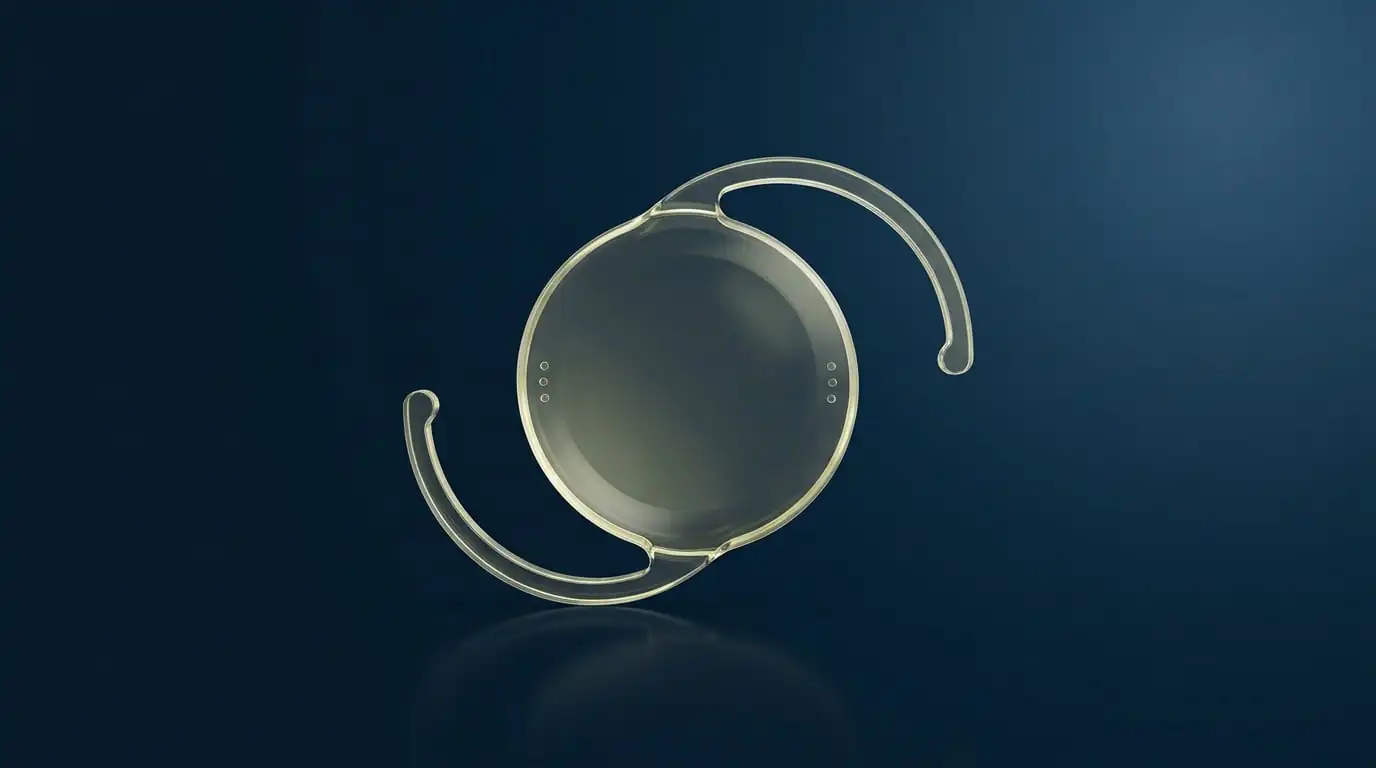
If you have astigmatism in your cornea, a toric lens can correct it in the same cataract operation. It is the option with the strongest scientific backing in this guide.
What astigmatism is
The ideal cornea is round like a football. With astigmatism it is more like a rugby ball: it curves more in one direction than the other, and the image looks blurred or “stretched” at every distance. Cataract surgery alone does not remove it, because it is in the cornea, not in the natural lens.
How a toric lens works
It has a different power on each axis, which exactly offsets that of your cornea. That is why it has to be placed at a precise orientation, calculated before surgery with specific measurements.
See what the studies say
- Better distance vision without glasses. A 2026 meta-analysis of 12 studies found that, compared with a standard lens, the toric lens leaves less residual astigmatism and more than triples the odds of ending up with minimal astigmatism (0.5 dioptres or less) [2].
- The effect lasts. A 2026 review of 1,564 eyes followed for at least a year showed that the correction holds at 2 years and that the lens barely rotates (about 2 to 3 degrees on average) [3].
- Few reoperations. Only 0.77% of the lenses in that review needed a second procedure to reposition them [3].
- European guidelines recommend it. The ESCRS advises considering it from 1 dioptre of corneal astigmatism; the benefit is greater from 1.5 and, above all, from 2 dioptres [1].
Its limits
- The lens can rotate. If it moves off its axis, it corrects less. Nearly all rotation happens in the first week; in a 2026 trial, the share of eyes with a meaningful rotation (10 degrees or more) ranged from 1% to 12% depending on the lens model [4]. If it happens, it can be repositioned in a brief procedure.
- Not for every kind of astigmatism. It works for regular astigmatism. In irregular corneas (for example, advanced keratoconus or scars) the result is less predictable, and we assess it case by case.
- On its own it does not fix presbyopia. A monofocal toric lens will give you good distance vision, but you will need glasses to read. If you also want near vision, toric versions of extended depth of focus and multifocal lenses exist.
Extended depth of focus (EDOF) lenses: from distance to the computer
In short
- What it corrects
- Distance and intermediate vision: the computer, the car dashboard.
- Who it suits
- If you drive a lot, work with screens or prefer few halos even if you wear reading glasses.
- Main drawback
- You will often need glasses for small print.
They give good distance and intermediate vision, but in most cases you will need glasses for small print [1]. They sit halfway between a monofocal and a trifocal.
How they work
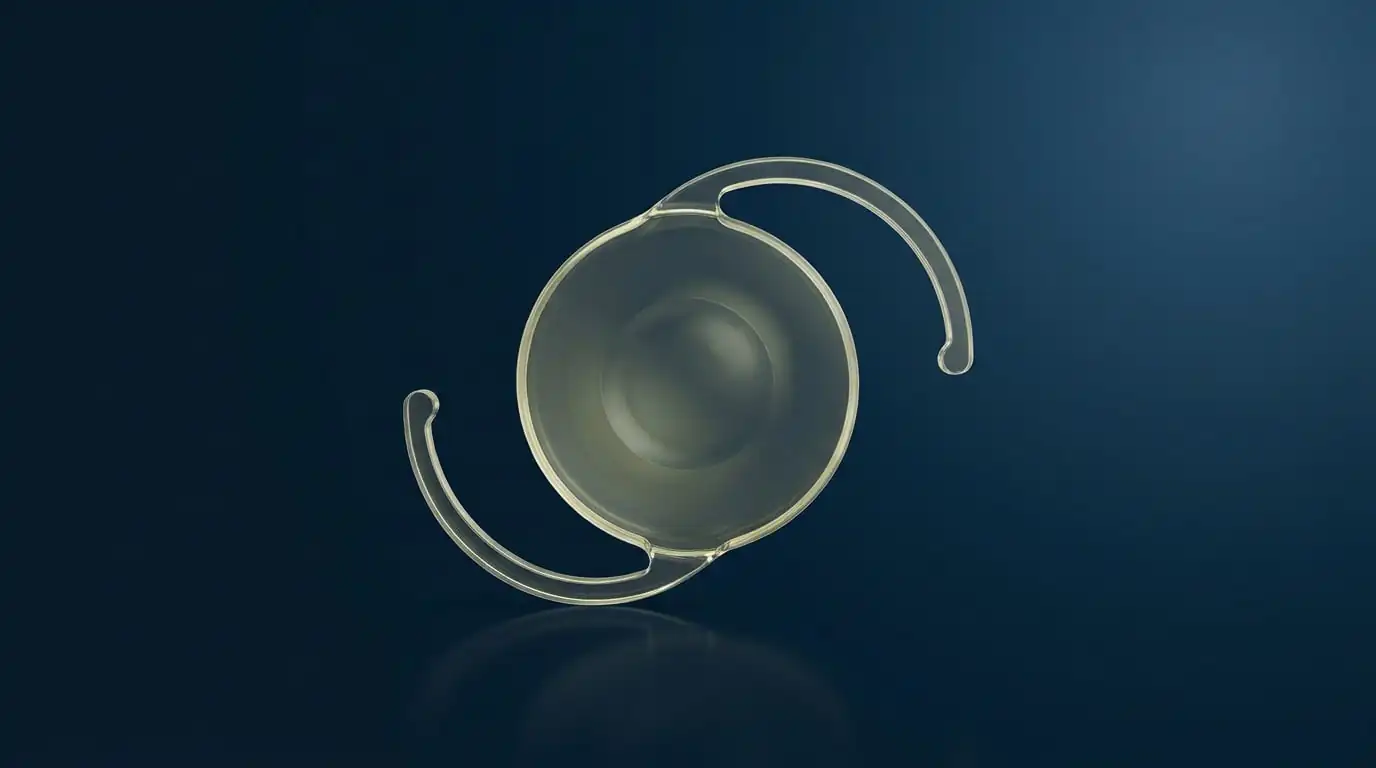
Instead of focusing on a single point, they “stretch” the focus into a continuous band from distance down to about 60 to 70 cm. That is the distance of a computer screen, the car dashboard, someone's face across the table or the hob.
There are two kinds. Refractive or “non-diffractive” designs usually give fewer halos, but also less range. Diffractive designs widen the focus more, at the cost of a higher risk of halos [9].
See what the studies say
- Better intermediate vision than a monofocal. An overview that pooled eight systematic reviews concludes that EDOF and trifocal lenses give better spectacle-free intermediate vision than a monofocal, with similar distance vision [6].
- At near, below the trifocal. In the 2024 Cochrane review, distance vision was similar with both lenses. At near, in a study of 60 people, 30% with EDOF did not reach comfortable reading, compared with 3% with a trifocal [5].
- Fewer halos in some models, but not all. The European guideline notes that some EDOF designs cause fewer light phenomena than multifocals, though not all of them [1]. In the Cochrane review, both kinds of lens caused halos and glare, with no clear differences, because the studies were small [5].
A gentler alternative: enhanced monofocals
New-generation monofocal lenses (“monofocal plus”) gain some intermediate vision without adding halos. A 2025 meta-analysis showed the same distance vision as a classic monofocal, better intermediate vision and a similar rate of light phenomena [12]. Against EDOF lenses, distance vision is similar, though studies are still lacking to compare them properly at intermediate range [11]. They will not free you from reading glasses.
Who it usually suits
- People who drive a lot, including at night, and do not want to risk marked halos.
- Anyone who spends many hours at a computer and does not mind glasses for small print.
- Anyone who wants less dependence on glasses but puts distance vision quality first.
Multifocal and trifocal lenses: distance, intermediate and near
In short
- What it corrects
- Distance, intermediate and near. It is the one that frees you most from glasses.
- Who it suits
- If you are highly motivated to live without glasses and your eye is healthy.
- Main drawback
- Halos around lights at night, especially at first, and slightly less contrast.
Trifocals are the lenses most likely to free you from glasses at all distances, in exchange for more halos and glare at night [1]. They are the most complete option, and also the most demanding.
How they work
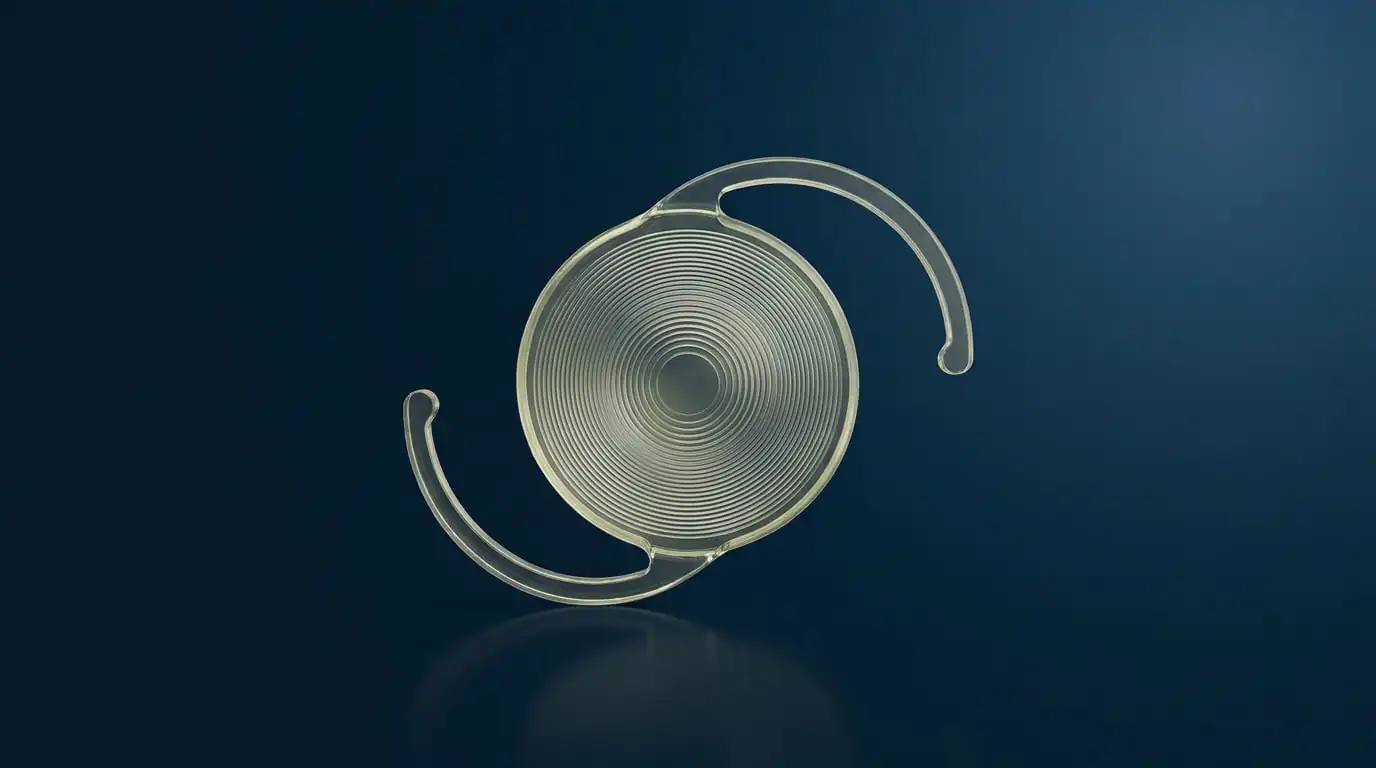
Their surface has microscopic rings that split the light into several focal points at once. Bifocals have two (distance and near); trifocals add a third for intermediate distance. The brain learns to keep the sharp image at each moment, a process called neuroadaptation, which usually takes weeks or months.
See what the studies say
- The best near vision. A meta-analysis of 28 clinical trials (2,465 patients) ranked trifocals first for spectacle independence and for unaided near vision[7].
- More spectacle independence than monovision. Compared with setting one eye for distance and the other for near, multifocals doubled the odds of not using glasses at all, though with more glare [14].
- Halos are common, but rarely very bothersome. In a meta-analysis of 580 patients with a widely used trifocal model, 44% saw halos, 34% glare and 30% starbursts. Only 1% to 3% described them as very bothersome [8]. (One of the authors works for the manufacturer of that lens.)
- Combining two kinds of lens. A trifocal in one eye and an EDOF in the other (“mix and match”) gave good results at all three distances in a 2026 meta-analysis, though the quality of the evidence is still very low [13].
What to know before choosing one
- You will see halos around lights at night, especially at first. For most people they become unimportant over time.
- Contrast may be slightly lower than with a monofocal, which is more noticeable in dim light [1].
- It needs a healthy eye. Residual prescription, dry eye, undetected corneal or macular disease and unrealistic expectations are common causes of dissatisfaction with these lenses [10]. Other conditions, such as glaucoma or diabetic retinopathy, can also limit the visual result [1]. That is why a full examination of the eye, including the retina, is essential before choosing one.
- If you do not adapt, there are solutions. First the treatable causes are corrected (dry eye, residual prescription). If the lack of adaptation persists, the lens can be exchanged for another, though that is an additional operation [10].
Who it usually suits
- People highly motivated to live without glasses, including for reading.
- Healthy eyes, with no retinal or optic nerve disease.
- Anyone willing to live with some night-time halos in exchange for that independence.
Which one is right for me?
The best lens is the one that fits your eyes and the way you live, and we choose it together. European guidelines stress that patients should receive detailed information to make this decision [1].
What we weigh up at the visit
- Your lifestyle. Do you drive at night? Read a lot? Spend hours at a computer? Play sport?
- How much being glasses-free matters to you. Some people want no glasses under any circumstances; others are happy to wear them for reading.
- The health of your eye. We examine the cornea, the ocular surface, the optic nerve and the retina. Some conditions make multifocal lenses inadvisable.
- The measurements of your eye. Biometry and a study of the cornea calculate the lens power and whether you have astigmatism to correct.
- Your tolerance of halos. Some people, because of their work or their temperament, cope badly with any light phenomenon.
Questions worth asking yourself before the visit
- At what times of day do my glasses bother me now?
- Which activity would I most like to do without glasses: driving, reading, my phone, the computer?
- Would halos around lights at night worry me?
- Do I prefer the sharpest distance vision or the greatest independence from glasses?
Common questions
Does the lens last a lifetime?
Yes. The intraocular lens does not wear out and never needs replacing. Over the years the capsule that holds it can cloud over (the so-called “secondary cataract”), which is treated with a quick laser at the clinic.
Do the halos go away?
For most people they become less bothersome over time, as the brain adapts. Only a small minority still describe them as very bothersome [8].
What if some prescription is left over?
Can I have a premium lens even without a cataract?
Yes, that is called refractive lens exchange. It can give great independence from glasses, but it is an operation that requires very careful patient selection [10].
Do both eyes need the same lens?
Not always. In some cases we combine different lenses in each eye to add up their strengths [13]. We decide according to your needs.
How much do they cost?
Premium lenses carry an additional cost over a monofocal, which depends on the model and the centre [1]. I will give you a detailed quote at the visit.
References
References published between 2024 and 2026, checked on PubMed. The numbers in square brackets in the text refer to this list.
- Wanten JC, Till V, Findl O, et al. ESCRS guideline for cataract surgery 2024: executive summary. J Cataract Refract Surg. 2026;52(9):e1-e13. doi:10.1097/j.jcrs.0000000000002012
- Hao LH, Pei C. Toric versus non-toric intraocular lenses for pre-existing corneal astigmatism: a systematic review and meta-analysis. Front Med (Lausanne). 2026;13:1777267. doi:10.3389/fmed.2026.1777267
- Lam CC, Tsang ZYA, Mok E, et al. Long-term astigmatism reduction with toric intraocular lenses: systematic review. J Cataract Refract Surg. 2026;52(6):616-622. doi:10.1097/j.jcrs.0000000000001917
- Lin X, Zhao X, Hou Y, et al. Rotational stability of three toric intraocular lens platforms after cataract surgery: a prospective multicenter randomized trial. J Cataract Refract Surg. 2026 (online ahead of print). doi:10.1097/j.jcrs.0000000000002023
- Tavassoli S, Ziaei H, Yadegarfar ME, et al. Trifocal versus extended depth of focus (EDOF) intraocular lenses after cataract extraction. Cochrane Database Syst Rev. 2024;7(7):CD014891. doi:10.1002/14651858.CD014891.pub2
- Daka Q, Henein C, Fang CEH, et al. Effectiveness of intraocular lenses designed to correct presbyopia after cataract surgery: an overview of systematic reviews. Br J Ophthalmol. 2025;109(12):1323-1329. doi:10.1136/bjo-2025-327363
- Li J, Sun B, Zhang Y, et al. Comparative efficacy and safety of all kinds of intraocular lenses in presbyopia-correcting cataract surgery: a systematic review and meta-analysis. BMC Ophthalmol. 2024;24(1):172. doi:10.1186/s12886-024-03446-1
- Zhu D, Karki S, Dhariwal M, et al. Patient-reported outcomes of visual disturbances with a trifocal intraocular lens: a meta-analysis. Ophthalmol Ther. 2025;14(2):379-390. doi:10.1007/s40123-024-01085-9
- Niknahad A, Łabuz G, Muzyka-Woźniak M, et al. An update on intraocular lens technology for presbyopia correction and visual outcomes. Med Sci (Basel). 2026;14(2):299. doi:10.3390/medsci14020299
- Dick HB, Gerste RD, Taneri S. Multifocal intraocular lenses in refractive lens exchange: guidelines to optimize their use and indications. Arch Soc Esp Oftalmol (Engl Ed). 2026;101(9):502615. doi:10.1016/j.oftale.2026.502615
- Barpaki D, Almaliotis D, Androudi S, et al. Visual performance comparison between enhanced monofocal and extended depth of focus intraocular lenses: a systematic review and meta-analysis. Cureus. 2026;18(2):e103841. doi:10.7759/cureus.103841
- Fernández J, Ribeiro F, Burguera N, et al. Visual and patient-reported outcomes of an enhanced versus monofocal intraocular lenses in cataract surgery: a systematic review and meta-analysis. Eye (Lond). 2025;39(5):883-898. doi:10.1038/s41433-025-03625-4
- Rakhimova M, Aldasheva N, Auyezova A, et al. Visual outcomes after mix-and-match implantation of trifocal and extended depth-of-focus intraocular lenses: a systematic review and meta-analysis. Medicina (Kaunas). 2026;62(6):1112. doi:10.3390/medicina62061112
- Hong ASY, Jin E, Shen L, Chen DZ. Monovision versus multifocality for presbyopia during primary phacoemulsification: systematic review and network meta-analysis. Eye (Lond). 2024;39(2):251-261. doi:10.1038/s41433-024-03454-x
Want to know which lens suits you?
Call and tell us it is for a cataract assessment. We measure your eye, check the retina and talk about what you want to see without glasses.