What it is
Over the years, high blood sugar damages the finest blood vessels in the body, and those in the retina are among the first. They weaken, leak fluid, bleed or close off, and the retina is left without the blood supply it needs.
It is one of the most common causes of blindness in people of working age. The good news: current treatments prevent severe sight loss in the vast majority of cases, as long as it is caught in time.
Why it gives no warning
You can see perfectly and still have advanced retinopathy. In a ten-year follow-up study, almost nine in ten people with mild retinopathy did not know they had it.
That is why the check-up is not something you do when you notice a problem: you have it every year, even if you see well. It is the only way to catch it when treatment works best.
How often to be checked
| If you have… | First check-up | After that |
|---|---|---|
| Type 1 diabetes | 5 years after diagnosis | Once a year |
| Type 2 diabetes | As soon as it is diagnosed | Once a year |
| Pregnancy with pre-existing diabetes | Before trying to conceive or early in the pregnancy | Every 1 to 12 months, depending on the state of the retina |
- If you already have retinopathy, check-ups are more frequent. I'll tell you how often based on what I see.
- During puberty retinopathy can progress faster, so teenagers with diabetes need closer monitoring.
- Gestational diabetes, the kind that appears only during pregnancy, does not need a retina check-up.
Stages and macular oedema
Non-proliferative
The early stage. Small bulges in the vessels and tiny haemorrhages appear. It can be mild, moderate or severe: the more severe it is, the more areas of the retina are left without blood supply.
Proliferative
Starved of blood supply, the retina grows new vessels. They are fragile: they bleed inside the eye, form scars that pull on the retina and can detach it or raise the pressure in the eye.
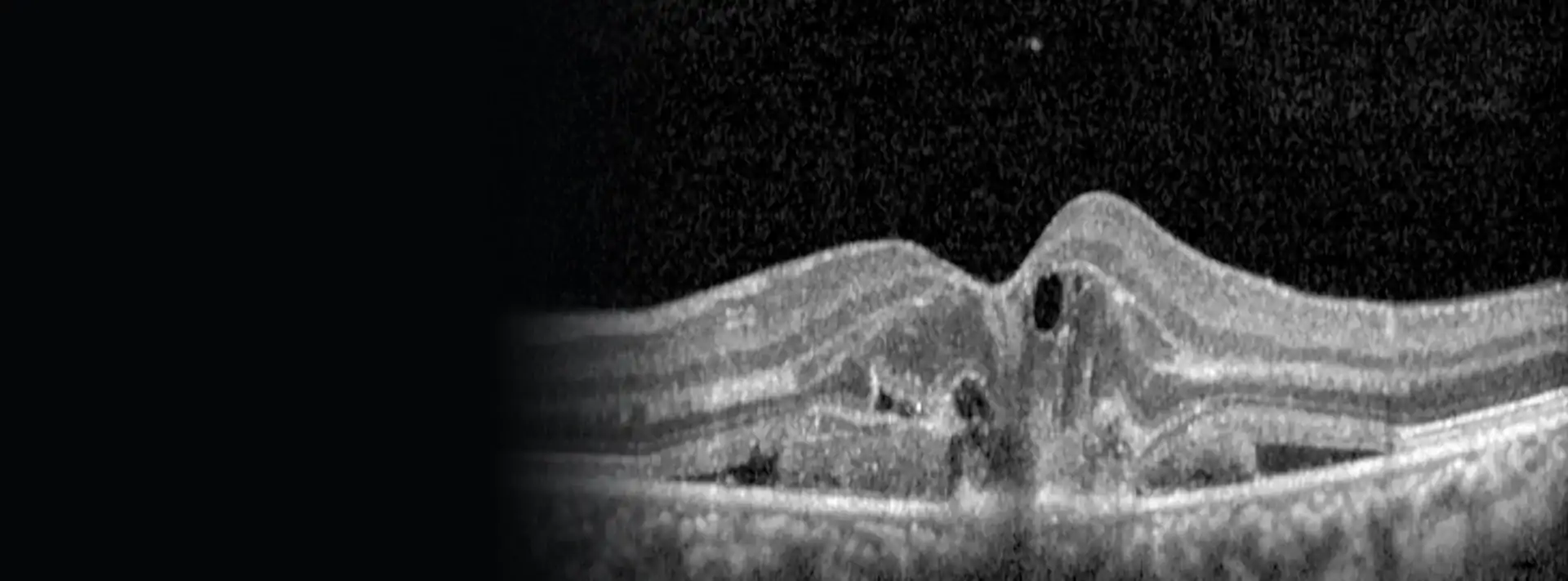
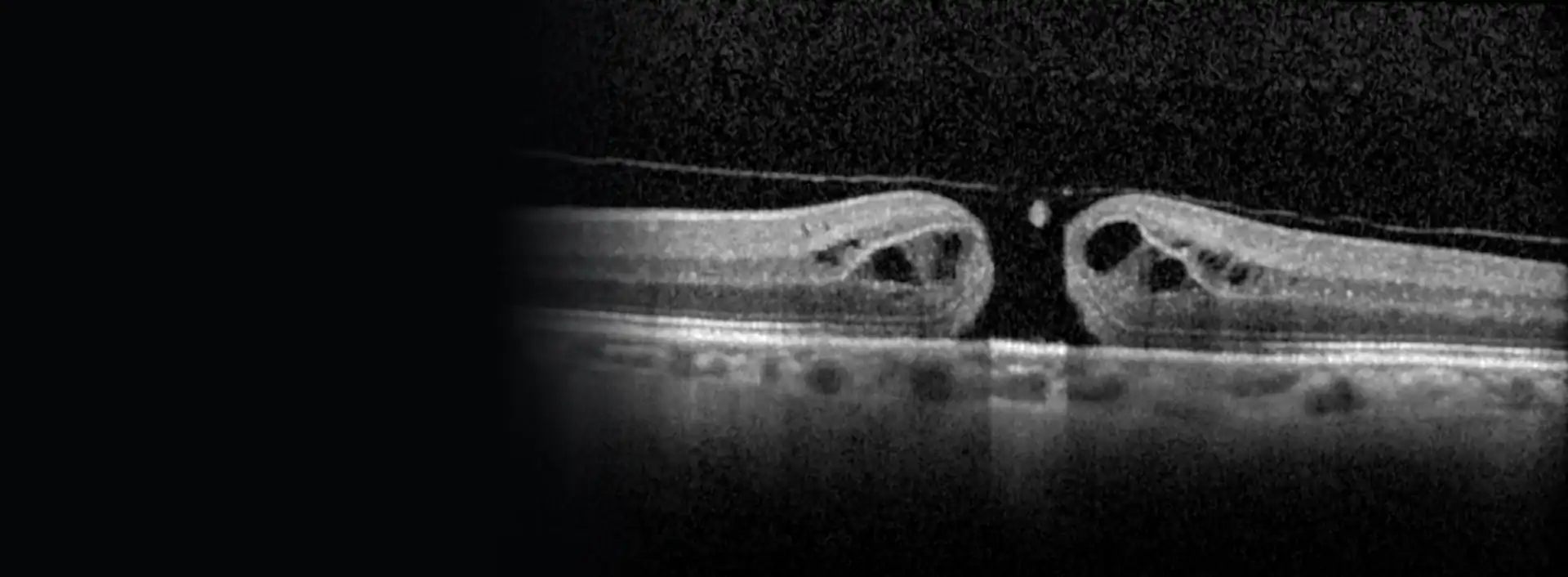
Diabetic macular oedema is a build-up of fluid in the macula, the centre of the retina. It can appear at any stage and is what blurs your reading vision. It shows up very clearly on OCT, even before you notice it.
Symptoms
When retinopathy does show, the usual signs are:
- Blurred vision that comes and goes, or that is hard to correct with glasses.
- Difficulty reading or making out details.
- Spots, threads or a sort of cobweb that appear suddenly.
- A shadow or curtain covering part of your vision.
If you suddenly see a shower of spots, a curtain, or you lose vision, call that same day. It could be bleeding inside the eye or a retinal detachment.
What you can do
The retina depends a great deal on how well your diabetes is controlled:
- Blood sugar. Keeping your glycated haemoglobin (HbA1c) at the target your doctor sets, around 7% or lower for most people, reduces the risk of retinopathy appearing and of it progressing.
- Blood pressure. Keeping it under control protects the vessels in the retina.
- Cholesterol and lipids. Controlling them helps slow retinopathy. In some patients who already have it, your doctor may consider a lipid-lowering drug, fenofibrate, which has been shown to slow it down.
- Going to your check-ups, even if you see well.
About the new diabetes drugs
Lowering blood sugar very quickly can make retinopathy worse at first. With semaglutide (Ozempic) a slightly higher risk has been seen, especially in people over 60 and in those who have had diabetes for more than ten years. Don't stop any treatment on your own: if you start one of these drugs and already have retinopathy, it is a good idea to have your retina checked.
What about aspirin? If you take it for another reason, it does not affect retinopathy. Carry on taking it as prescribed.
How it is diagnosed
With an examination of the back of the eye with the pupil dilated, a retinal photograph to record the retina and compare it at each check-up, and OCT, which detects macular oedema even before you notice it.
When I need to see in detail which areas have lost their blood supply, I add other imaging tests. I send the results to your endocrinologist or your GP: the retina and diabetes are best treated as a team.
Treatment
Macular oedema
The first-choice treatment is intravitreal injections of anti-angiogenic drugs (anti-VEGF): they dry up the fluid and, in many cases, improve vision. They are given with anaesthetic drops and have to be repeated, closer together at first and then further and further apart.
If there is oedema but you see well, it is sometimes reasonable to wait and monitor closely. And when injections are not enough, there are slow-release steroid implants, with the drawback that they can raise the pressure in the eye and bring on a cataract sooner.
After an injection, call straight away if you notice:
Proliferative retinopathy
It is treated with laser to the outer retina (panretinal photocoagulation), with anti-VEGF injections, or both. The aim is to make the abnormal vessels regress before they bleed or pull on the retina.
Vitrectomy
When there is bleeding inside the eye that does not clear, or a scar that pulls on the retina and threatens the macula, surgery is needed. A vitrectomy removes the vitreous gel along with the blood and frees the retina. I perform it with micro-incision instruments (23G, 25G and 27G), which have greatly improved results and recovery.
Do you have diabetes and has it been more than a year since your retina was checked?
Call and I'll give you an appointment. An examination with OCT is enough to know whether your retina is fine or needs monitoring.