What it is
A glaucoma suspect is someone who is more likely than usual to develop glaucoma but does not yet have any damage to the optic nerve. There are three situations:
- The eye pressure is high while the nerve, the OCT and the visual field are normal. This is ocular hypertension, the most common case.
- The optic nerve looks doubtful on examination or on the OCT, even though the pressure is normal.
- The visual field shows a change that could be glaucoma, with no other disease to explain it.
A pressure above 21 mmHg is usually considered high. Over the age of 40, about 4 or 5 in every 100 people have it, and many do not know because it causes no symptoms. That is why it is worth measuring from that age even if you see well.
How likely it is to become glaucoma
The best evidence comes from a large American study that followed people with high eye pressure for more than 20 years, the Ocular Hypertension Treatment Study. It shows three things:
- Most people do not develop glaucoma in the short term. Without treatment, more than 90% still had no glaucoma after 5 years.
- Treatment halves the risk. After 5 years, 9.5% of those without treatment developed it, against 4.5% of those using drops. Starting treatment somewhat later did not leave them worse off.
- In the long run the risk is real. After 20 years, almost half had developed glaucoma in at least one eye, and 1 in 4 had lost some visual field.
No need to panic, but no disappearing either. Ocular hypertension is almost never urgent. What matters is keeping up with check-ups, because any glaucoma that does appear will not warn you either.
What raises the risk
Not all high pressures are the same. Each person's risk depends on how many of these factors they have and how strong they are:
- A higher pressure. The higher it is, the greater the risk.
- A thin cornea. As well as being a risk factor in itself, it can make the pressure look lower than it is.
- A cornea that cushions poorly, known as low hysteresis. I measure it with ORA technology.
- An optic nerve with a large cup, or a small bleed at its edge.
- Small changes in the visual field.
- Age, short-sightedness and diabetes.
- Having relatives with glaucoma.
- Certain deposits inside the eye that show up on examination (pseudoexfoliation or pigment dispersion).
An example from the same study: with a pressure of 26 or more and a thin cornea, 36 in 100 people developed damage within 5 years. With a pressure below 24 and a thick cornea, only 2 in 100 did. That is why I never decide on the pressure reading alone.
If glaucoma runs in your family
Glaucoma clearly runs in families. In a Dutch study that examined the brothers and sisters of glaucoma patients, having a parent or sibling with the disease made it about nine times more likely. The risk is greater when it is a sibling, and greater still if there are several.
- Get checked from the age of 40 even if your sight is perfect, and earlier if glaucoma appeared young in your family.
- Tell me who has it and how they have done: if someone has lost sight to glaucoma, it helps me judge your risk.
- Routine genetic tests for adult glaucoma are not recommended today. An eye examination is still the tool that works.
How I assess it
The first visit tells us where you stand and gives a baseline to compare against later. All the tests are painless:
- Eye pressure, measured with ORA to correct for the effect of the cornea.
- Corneal thickness (pachymetry), which I measure with the ORA and, when needed, with corneal topography.
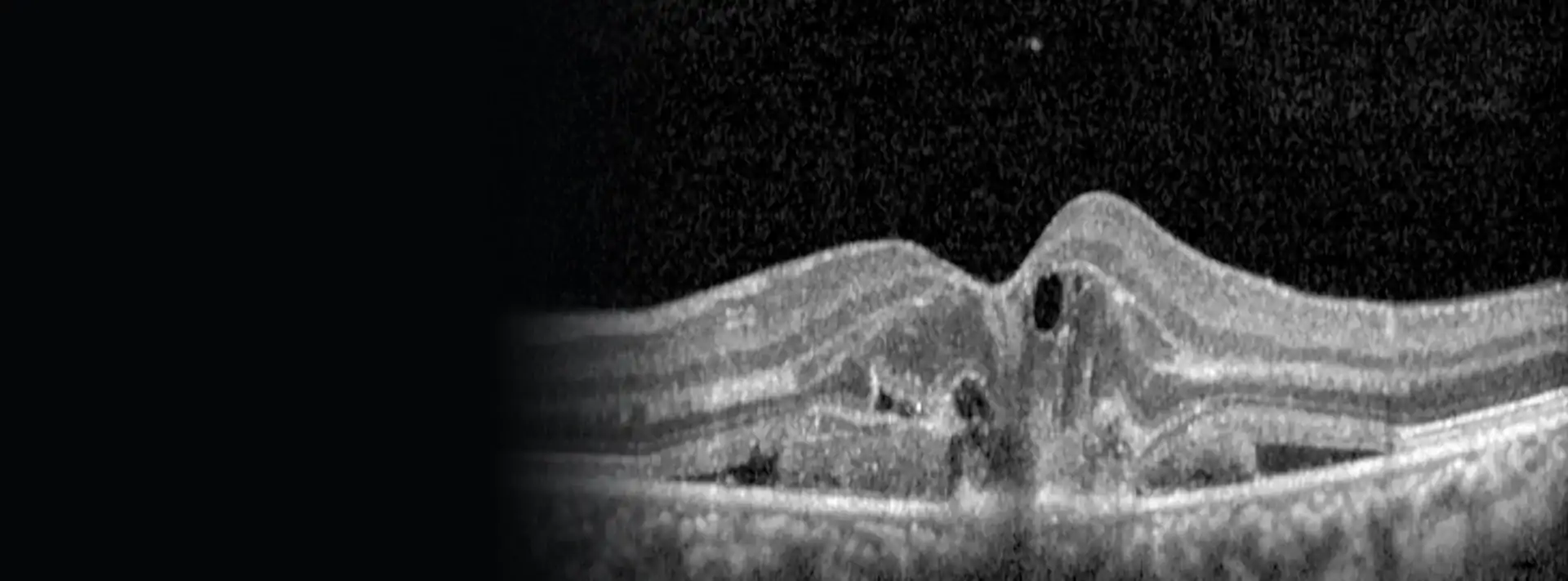
- Optic nerve OCT, which measures in microns the fibres around the nerve and the ganglion cells of the macula. It picks up losses before they show on the visual field.
- The visual field. If it comes out abnormal the first time, I repeat it: there is a learning curve and results often improve on the second go.
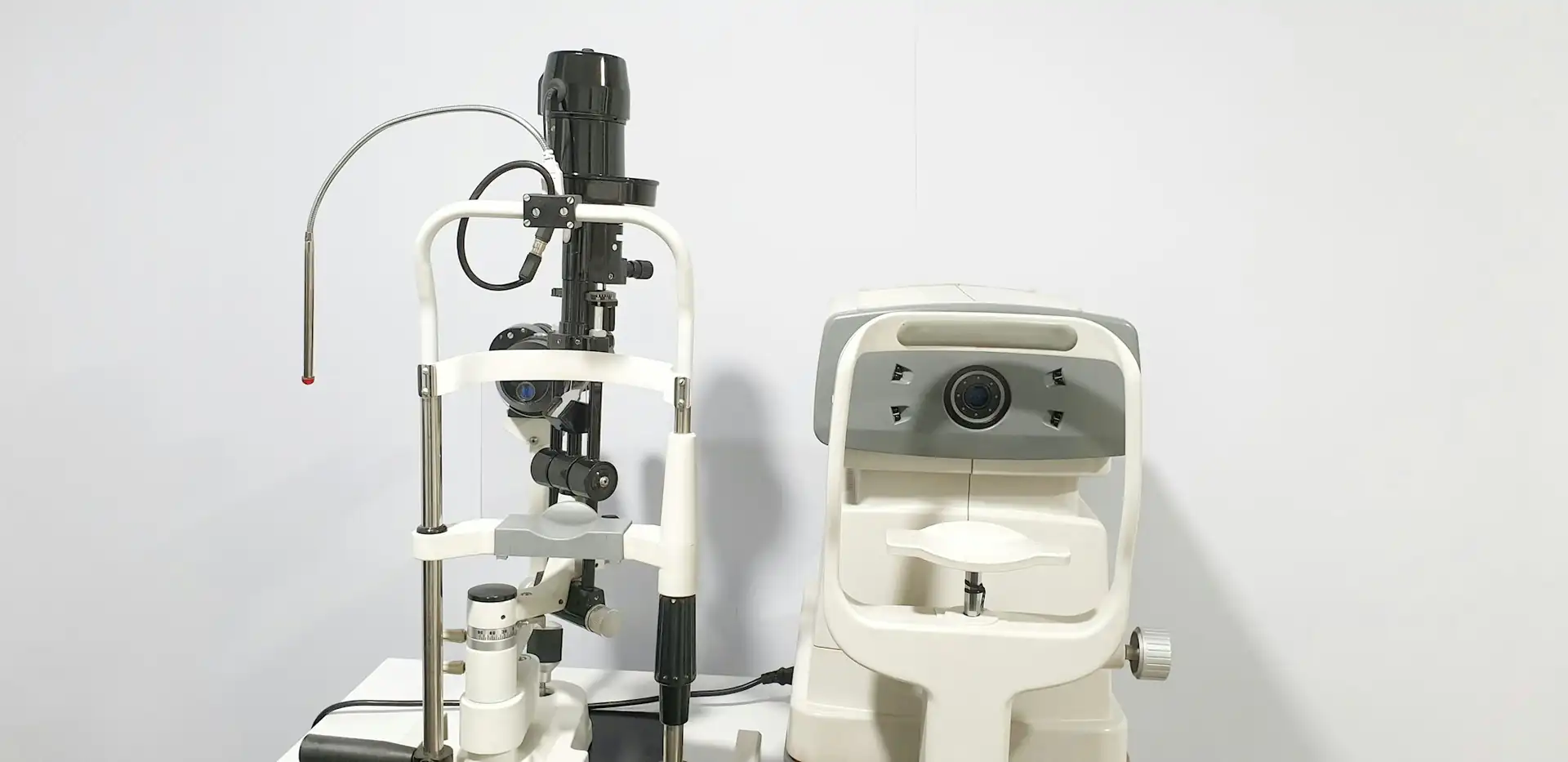
- Gonioscopy, to confirm that the angle where fluid drains out is open. If it is narrow, the approach changes: I explain it in the guide on narrow angles.
- A look at the back of the eye, examining the optic nerve directly.
Does it need treatment?
Not always. Treating everyone with high pressure would mean many people using drops for years without needing them. The decision is individual and we make it together, taking into account:
- How many risk factors you have and how strong they are.
- Your age and general health.
- What you would prefer, and whether you can see yourself using drops every day for years.
If we decide to treat, the usual start is eye drops. There is also a laser, selective laser trabeculoplasty (SLT), which can be used as the first treatment. A reasonable starting goal is to lower the pressure by about 20%. If one drop is not enough or does not suit you, it is changed or another is added.
And if everything stays stable on treatment for a long time, it is sometimes possible to try reducing it, always with check-ups.
If you use drops
After putting in a drop, close your eye gently and press on the inner corner for a couple of minutes. Less of the drop reaches your bloodstream and you get fewer side effects. All the steps are in how to put in your drops. And if they sting, disagree with you or you struggle to remember them, tell me.
Check-ups
Whether you are treated or not, you need check-ups. At every visit I check the pressure and, as often as your risk calls for, I repeat the OCT and the visual field. There is no single schedule for everyone: with relatives who have glaucoma, a thin cornea or very high pressure, it is worth seeing you more often.
If at some point the OCT or the visual field shows damage that is progressing, we are no longer talking about a suspect but about glaucoma, and treatment is adjusted accordingly.
Have you been told your eye pressure is high, or does glaucoma run in your family?
Call and we will look into it in one visit: pressure, cornea, optic nerve OCT and visual field.